
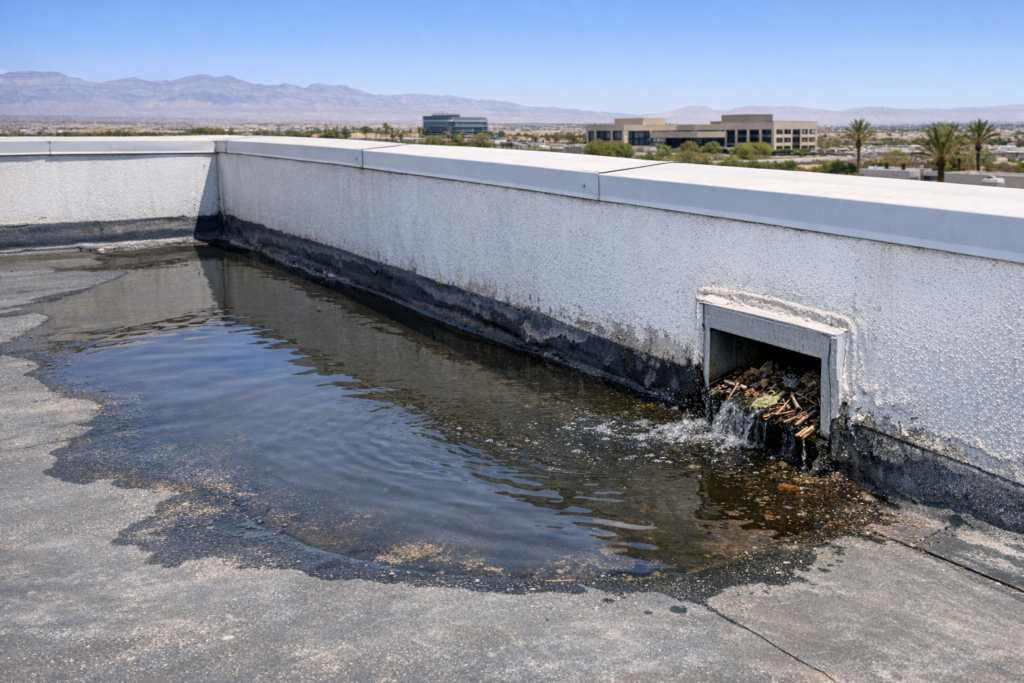
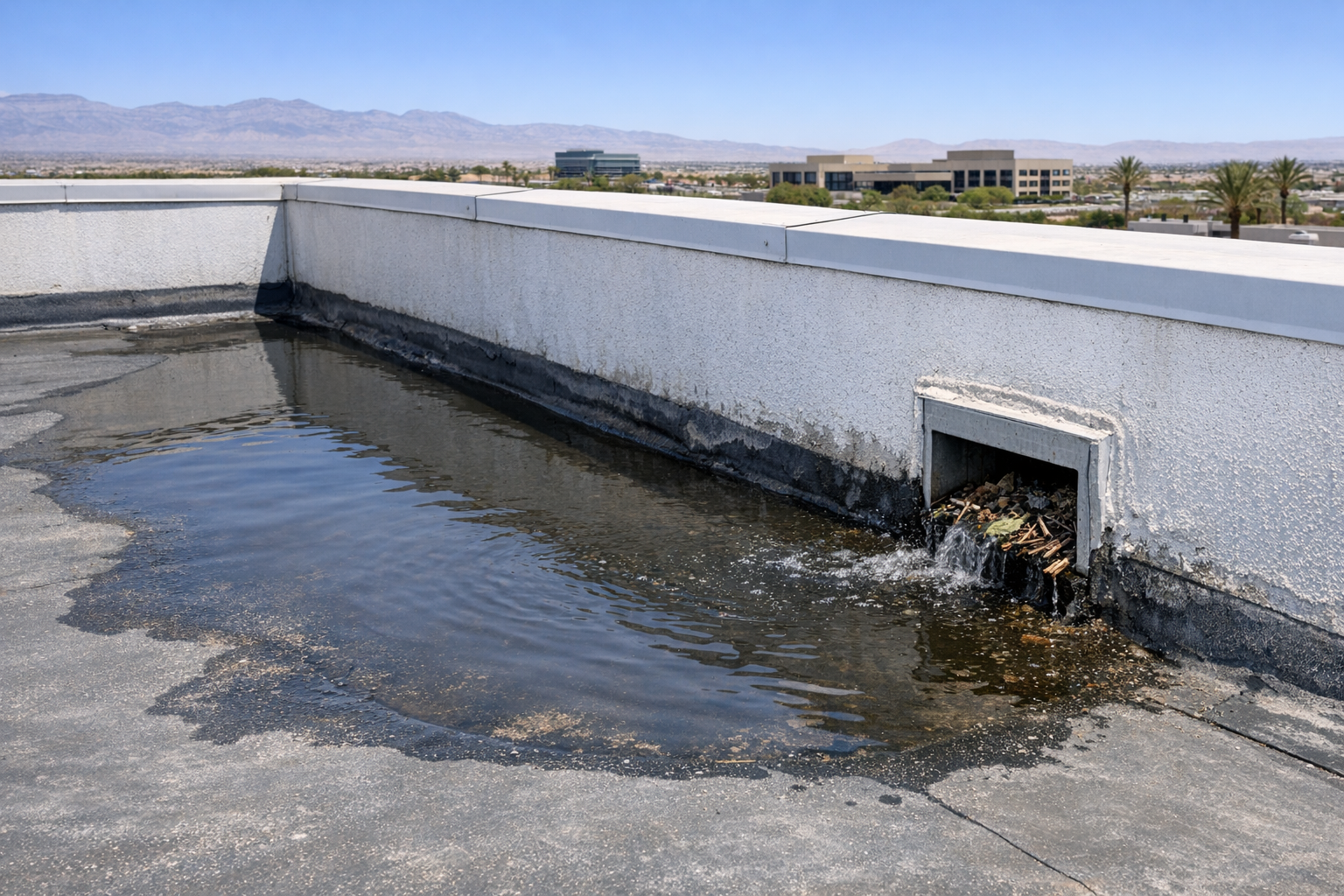
Roof scupper overflow is a critical flat roof drainage issue that often goes unnoticed until water damage appears inside your building. On commercial properties in Summerlin, blocked or undersized roof scuppers can cause water to back up, pond on the roof, or spill down exterior walls. Understanding the causes and signs of scupper overflow is essential for protecting your property from costly damage and ensuring the long-term health of your roof.
What Is a Roof Scupper and Why Is Overflow a Problem?
A roof scupper is an opening in the parapet wall or edge of a flat or low-slope roof designed to allow rainwater to drain off the roof and away from the building. When these outlets become blocked, damaged, or are inadequately sized for heavy rainfall, water can’t escape quickly enough. This leads to ponding on the roof surface, overflow down building walls, and, in severe cases, interior leaks or structural problems.
In Summerlin’s commercial districts, flat roofs with parapet walls are common. Scupper overflow can compromise roof membranes, cause water intrusion, and accelerate deterioration of both roofing and exterior finishes. Unlike residential gutters, scuppers are often less visible from the ground, making regular inspection and maintenance even more important.
Observable Signs of Roof Scupper Overflow
Detecting scupper overflow early can prevent extensive water damage. Look for these visible signs from a safe vantage point or ground level:
- Water stains or streaks running down the exterior walls below roof scuppers
- Ponding or standing water visible on flat roof surfaces after rainfall
- Debris or plant growth protruding from scupper openings
- Peeling paint, efflorescence, or mold on parapet walls
- Overflowing water observed during storms, especially near roof corners
Inside the building, ceiling stains or dampness along perimeter walls may also indicate that water is not draining properly through the scuppers. If you notice these symptoms, it’s time to arrange a professional roof inspection to assess the source and scope of the problem.
Common Causes of Scupper Overflow on Flat Roofs
Scupper overflow usually results from one or more of the following issues:
- Debris Accumulation: Leaves, dust, bird nests, and trash can block scupper openings, especially after windstorms common in the Las Vegas Valley.
- Inadequate Scupper Size: Some older roofs have scuppers that are too small to handle heavy rain, leading to backup and overflow.
- Poor Roof Slope or Ponding: If the roof surface does not slope properly toward the scuppers, water can accumulate in low spots and eventually overflow.
- Damaged or Dislodged Scupper Components: Bent or broken metal, cracked sealant, or missing screens can all contribute to improper drainage.
- Improper Maintenance: Skipping regular roof and drainage inspections allows minor clogs or damage to worsen over time.
Addressing the root cause is crucial for a lasting solution. A professional roofer can help you identify whether a simple cleaning, scupper resizing, or roof slope correction is needed.
Potential Risks and Consequences of Ignoring Scupper Overflow
Ignoring roof scupper overflow is never a good idea. The risks include:
- Roof Membrane Deterioration: Prolonged ponding water can cause seams to separate or surface blisters to form, compromising waterproofing.
- Interior Water Damage: Overflowing water may find its way into the building, leading to ceiling leaks, damaged insulation, and mold growth.
- Structural Damage: Persistent moisture can weaken roof decking, parapet walls, and even building foundations over time.
- Safety Hazards: Water spilling onto walkways or entryways below scuppers increases the risk of slip-and-fall accidents.
Las Vegas’s intense sun can also accelerate the deterioration of wet roofing materials, making timely intervention even more important. Preventing overflow helps protect both your property and occupants.
Repair vs. Replacement: Choosing the Right Solution for Scupper Issues
Deciding between repair and replacement depends on the specific cause and extent of the overflow problem:
- Minor Clogs or Blockages: These can often be resolved by cleaning the scupper and surrounding roof areas, removing debris, and flushing with water.
- Damaged or Corroded Scuppers: Localized repairs, such as resealing joints or replacing rusted metal, may restore proper function.
- Undersized or Poorly Positioned Scuppers: Adding additional scuppers or enlarging existing ones might be required to meet drainage needs, especially for older flat roofs.
- Chronic Ponding Due to Roof Slope: Significant issues with roof slope or structure may require partial or full roof resurfacing to ensure water flows to the drainage points.
Professional evaluation is critical. A qualified roofer will determine if the issue can be fixed with targeted repairs or if more extensive modifications are needed to prevent future overflow. For more on flat roof repair methods, see Flat Roof Repair Las Vegas.
Cost Factors in Addressing Roof Scupper Overflow
The cost to resolve scupper overflow varies widely based on:
- Accessibility and size of the affected roof area
- Extent of blockage, damage, or required modifications
- Need for roof membrane repair or replacement
- Number of scuppers involved
- Labor, safety requirements, and any necessary permits
Simple cleaning or minor repairs are generally less costly than structural changes or adding new drainage components. However, delaying repairs can lead to much greater expenses if water damage spreads. For related guidance, review Roof Repair Las Vegas and Roof Inspection Las Vegas.
Preventing Roof Scupper Overflow on Commercial and Flat Roofs
Regular maintenance is the best defense against scupper overflow. Here are proven strategies:
- Schedule Routine Roof Inspections: Have your roof and drainage points inspected at least twice a year, especially before and after monsoon season.
- Clear Debris Promptly: Remove leaves, litter, and other debris from the roof and scupper openings after storms or high winds.
- Install Scupper Screens: Fitted screens help prevent large debris from entering and blocking scuppers.
- Monitor for Signs of Ponding: Watch for water that remains on the roof more than 48 hours after rain and address drainage issues promptly.
- Consult a Professional for Persistent Issues: If overflow is recurring, arrange a roofing assessment to determine if structural changes are needed.
For more on ongoing roof care, see Roof Maintenance Las Vegas and Commercial Roof Inspections Las Vegas.
Professional Boundaries: When to Call a Roofer
Some maintenance tasks, such as removing visible debris from accessible scupper openings, may be manageable for building staff. However, do not attempt to enter unsafe areas, climb onto the roof without proper training, or dismantle scupper assemblies. Professional roofers have the equipment and expertise to:
- Safely access and inspect flat roofs and parapet walls
- Diagnose hidden drainage problems and membrane issues
- Repair or replace damaged scuppers, flashing, and roofing materials
- Recommend long-term solutions for chronic drainage concerns
If you notice repeated overflow, ponding, or signs of water intrusion, schedule a professional inspection. Learn more about what to expect at Roof Inspection Las Vegas and Commercial Roof Inspections Las Vegas.
Case Example: Roof Scupper Overflow in Summerlin
Summerlin’s commercial and multi-unit residential buildings often feature flat roofs with parapet walls and multiple scuppers. After a desert rainstorm, property managers may spot water streaming over parapet edges or discover new stains along building exteriors. In many cases, a quick roof inspection reveals scuppers blocked by windblown leaves or trash, or undersized scupper openings that can’t handle heavy rainfall. Addressing these issues promptly—by clearing debris and evaluating scupper sizing—protects roof membranes and prevents interior leaks, especially as buildings age and roof drainage needs evolve.
For more on maintaining commercial roofs, explore Commercial Roofing Las Vegas and Services.
Frequently Asked Questions About Roof Scupper Overflow
How often should roof scuppers be inspected and cleaned?
Scuppers should be visually checked at least twice a year—preferably in the spring and fall—and after major wind or rain events. In debris-prone areas, quarterly inspections may be warranted to ensure ongoing drainage.
Can I clear a blocked scupper myself?
If the scupper is easily accessible from a ladder and there’s no risk of falling or damaging the roof, you might remove loose debris. However, do not attempt roof access or repairs without proper safety equipment and training. Call a professional for persistent or hard-to-reach blockages.
What causes scuppers to overflow even when they aren’t blocked?
Undersized scuppers, poor roof slope, or overwhelmed drainage during intense storms can all cause overflow. A roofer can assess whether the system needs additional or larger scuppers, or if roof slope adjustments are needed.
What damage can result from repeated scupper overflow?
Chronic overflow can lead to roof membrane failure, water intrusion, mold growth, and long-term structural problems in both the roof and building walls. Early intervention prevents costly repairs and maintains building value.
Is roof scupper maintenance included in regular roof inspections?
Yes, reputable roof inspection services—like those offered by Presto Roofing LV—will include drainage checks and scupper evaluations as part of a comprehensive assessment. See Roof Maintenance Las Vegas for details.
Get an Estimate for Roof Scupper Overflow Solutions in Summerlin
Roof scupper overflow is a preventable but potentially serious issue for flat and commercial roofs in Summerlin. If you see water stains, ponding, or overflow after rain, let Presto Roofing LV help you protect your property. Call 702-867-0187 for a professional roof assessment and customized drainage solution, or visit our homepage to request an estimate today.