
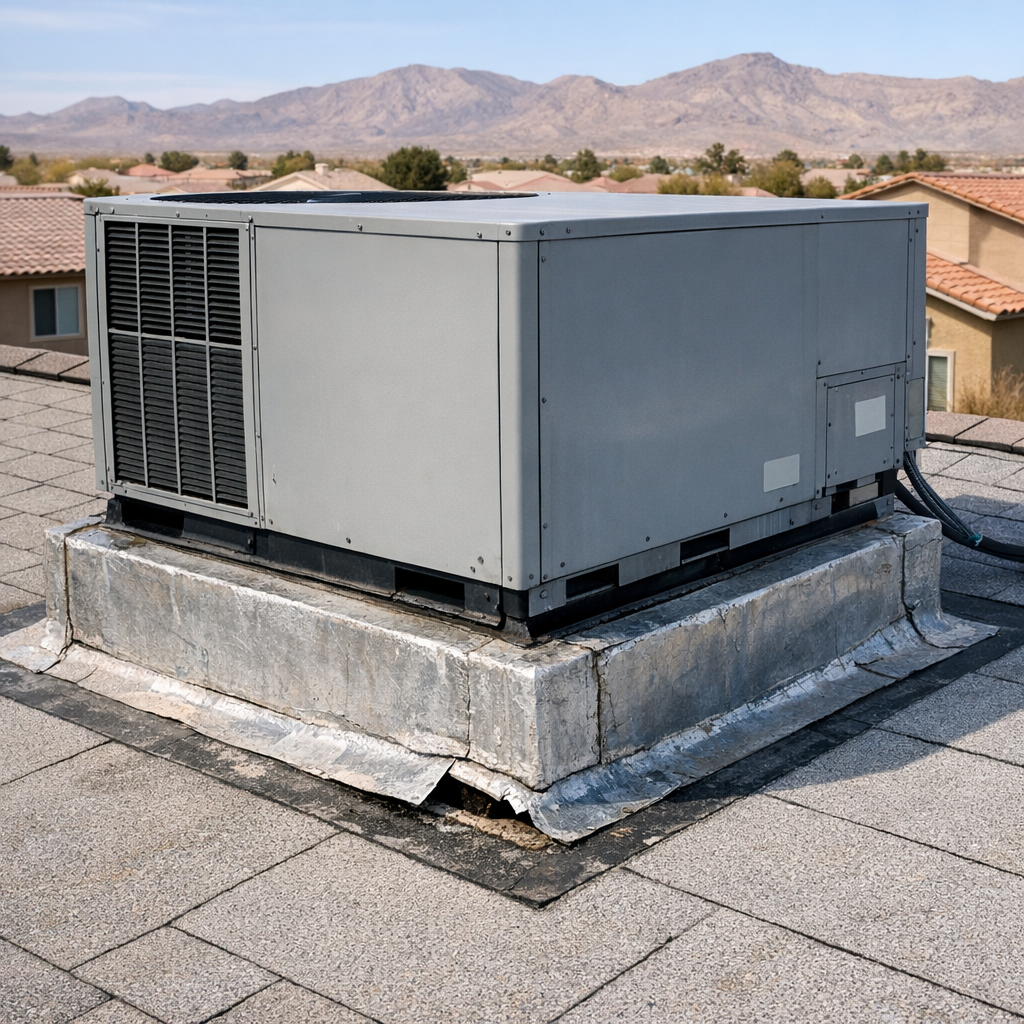
An HVAC curb roof leak can show up as a ceiling stain near a rooftop air-conditioning unit, especially after rain. The cause may be damaged flashing around the equipment curb, a roof membrane problem nearby, or water coming from the AC system itself. Finding the actual entry point matters more than covering the nearest visible crack.
For Las Vegas homeowners, the practical first step is to document when the moisture appears and arrange an inspection without climbing onto the roof. This guide explains what to notice, which questions to ask, and how to compare a focused repair with broader roof work.
What is an HVAC curb, and why does it matter?
A curb is the raised support where rooftop equipment meets the roof. Flashing connects the surrounding roofing to that raised structure, helping keep rain outside the building. This junction needs attention because it brings together the roof surface, vertical sides, corners and equipment connections.
A rooftop unit does not automatically mean the home has a particular roofing material. The surrounding roof might use different assemblies, and the repair must suit the existing system. A photograph from ground level may show the equipment, but it usually cannot establish the condition of the concealed connections.
If you are unsure what is installed, start with a roof inspection in Las Vegas. Ask for clear photographs and an explanation of the roof type before agreeing to a repair material.
Warning signs you can document safely
Notice the timing and location of the symptom. A stain that grows during rain tells a different story from dampness that appears while the AC runs on a dry afternoon. These observations are clues, rather than proof of a diagnosis.
- Photograph the ceiling mark from the same location so changes are easier to compare.
- Record whether the AC was operating and whether rain had recently occurred.
- Note nearby vents, light fixtures or walls without touching wet electrical components.
- Keep previous roofing and HVAC service records available for the inspection.
- Tell the inspector about repeat repairs, even if the stain appeared to stop temporarily.
Keep people away from an unstable or sagging ceiling. Do not cut into wet ceiling material, handle electrical fittings or climb onto an unfamiliar roof to investigate. Active water entry deserves prompt professional attention.
Roof leak or AC drainage problem?
The roofing and HVAC systems sit close together, but they do different jobs. An inspection may need to consider both. Reporting the symptom as “water near the AC” is more useful than insisting that a particular seam must be the cause before anyone has examined it.
When the roofing detail needs attention
A roofing inspection should review the curb flashing, corners, connections and surrounding roof condition. The inspector should explain whether the visible defect provides a plausible path for rainwater and whether there are other suspect areas nearby. Water can travel before it becomes visible indoors, so the ceiling stain alone does not identify the entry point.
When HVAC service may also be needed
If moisture appears during cooling operation in dry weather, tell the HVAC technician about it. Equipment drainage and related components may need evaluation. Roofing work will not resolve a separate equipment problem, and an equipment repair will not restore a damaged roof flashing detail. When both trades are involved, ask each to document its findings so the scopes do not leave a gap.
Why adding more sealant may miss the problem
A visible patch is not the same as a diagnosis. Before authorizing another coating or bead of sealant, ask what failed, what material is underneath, and how the proposed repair connects to sound roofing. Different roofing systems require compatible products and details.
Useful inspection photographs should show the overall location as well as the close-up defect. A close-up alone may hide the relationship between the curb and the surrounding roof. For a low-slope assembly, our flat roof repair information provides a starting point for discussing the broader roof condition.
A written scope should identify preparation, damaged material to be addressed, the intended repair area and any limitations. If access beneath equipment is needed, clarify who handles equipment work and whether it is included. Avoid comparing proposals by price alone when they describe substantially different repairs.
Focused HVAC curb roof leak repair or larger work?
A localized repair may be appropriate when the problem is limited to a detail and the adjoining roof remains serviceable. Broader work may deserve discussion when there are multiple unresolved leaks, extensive deterioration or evidence that the roof assembly has problems beyond the curb. The inspection findings should drive that choice.
Ask the roofer to separate confirmed observations from areas that remain concealed. A responsible proposal can explain uncertainty without pretending that an exterior photograph proves the condition of every layer. If the recommendation is replacement, request the specific findings supporting it and compare the scope with your roof replacement options.
For business properties, equipment access and service coordination can affect the project. A commercial roof inspection should help establish which areas need attention and how the proposed roofing work relates to rooftop equipment.
For an overview of related work, see our roof repair services and the Presto Roofing LV homepage.
What affects the repair estimate?
There is no reliable universal price for a leak around rooftop equipment. Relevant factors include safe access, roof material, the size of the affected area, previous patches, concealed damage discovered during work and whether HVAC coordination is necessary. These details can change the work even when two properties have similar-looking AC units.
Request an itemized scope and ask how additional findings will be handled before extra work begins. Clarify cleanup, photographs, exclusions and any written warranty terms actually offered. Do not assume a general roofing estimate includes AC servicing, interior ceiling restoration or every future leak elsewhere on the roof.
Maintenance after the repair
Keep the repair photographs and scope with your property records. After subsequent rain, document whether the original symptom returns. An old ceiling stain may remain visible after a repair, so compare dated photographs rather than relying on memory alone.
Let future HVAC technicians know that roofing work has been completed near the unit. Arrange roof maintenance appropriate to the installed system, and ask how equipment service visits should be coordinated. IKO’s building owner guidance also highlights inspection of flashing, penetrations, drainage and HVAC condensate lines. Follow system-specific recommendations rather than treating every roof alike.
Frequently asked questions
Does a stain below the AC prove the curb is leaking?
No. The location is useful information, but water may travel before it reaches the ceiling. Roofing defects and equipment-related moisture need to be distinguished through inspection.
Can I repair the flashing myself?
Homeowners can document indoor symptoms and gather service records. Roof access, equipment connections and material compatibility make the actual repair a professional task. Avoid climbing onto the roof or applying an unknown product.
Will the whole roof need replacement?
Not necessarily. A limited defect may allow a focused repair. The surrounding roof condition, leak history and inspection findings determine whether a broader scope should be considered.
Should I call a roofer or an HVAC technician first?
Explain when the water appears. Rain-related symptoms warrant roofing evaluation; dry-weather moisture during AC operation also warrants HVAC evaluation. Some situations require both, with documented findings and clear responsibility for each part.
What should I send when requesting an inspection?
Send the property location, indoor photographs, symptom timing, roof information you already have and relevant service records. Avoid accessing the roof just to obtain a closer picture.
Get help with a leak near rooftop equipment
Presto Roofing LV can help you discuss the roofing side of the problem and the next inspection step. Visit our roof leak repair page, review our roofing services, or contact Presto Roofing LV. Call 702-867-0187 and describe what you are seeing, when it started and whether it follows rain or AC operation.