
Storm damage in Las Vegas often becomes noticeable after the weather clears: a tile in the yard, a fresh ceiling stain or a drip that appears only when rain blows toward one side of the house. Before arranging a repair, it helps to separate what you can safely document from what requires a roof inspection.
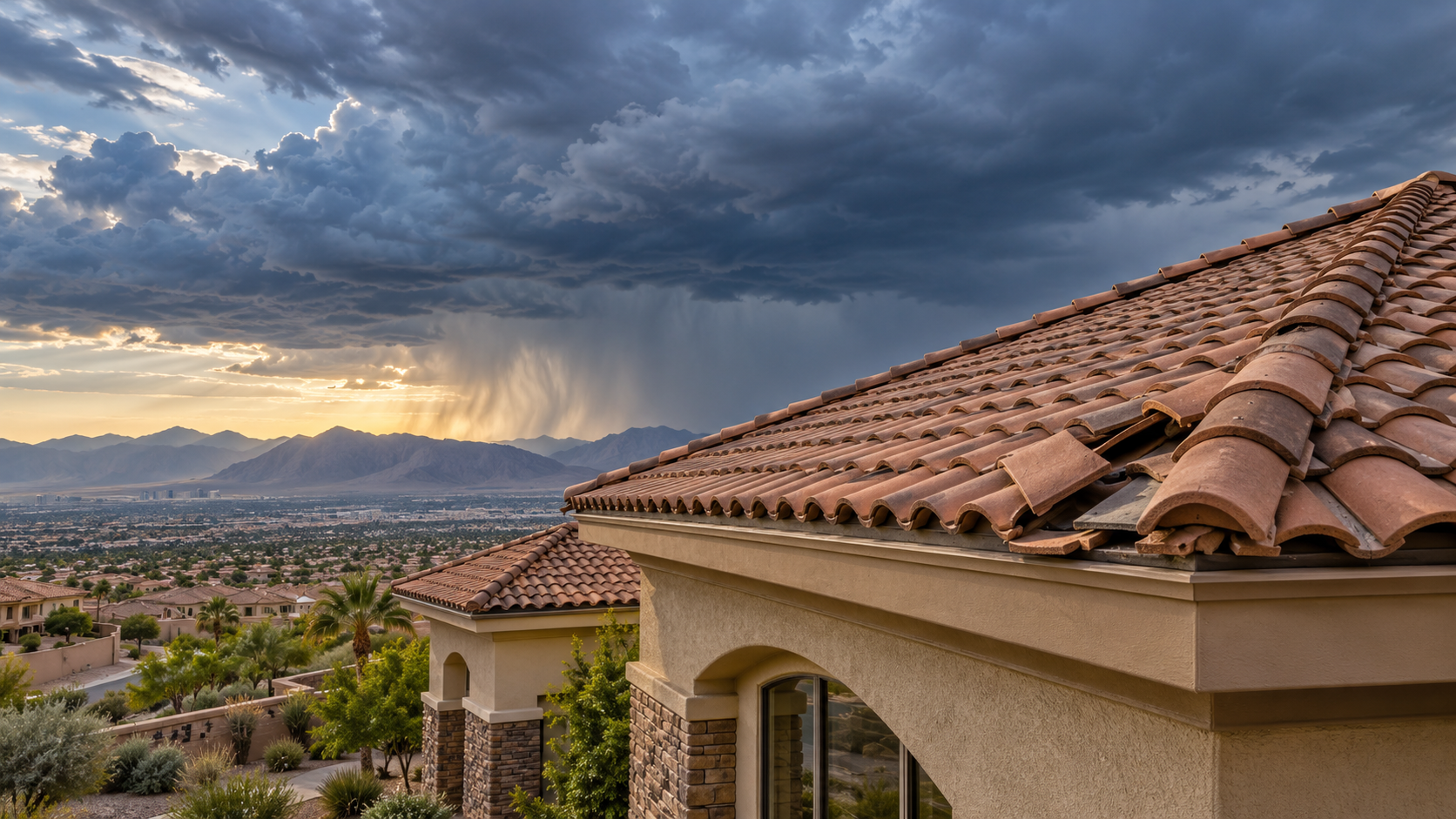
This guide covers the next steps for homeowners in Las Vegas, Henderson, Boulder City, Mesquite and Pahrump, including Summerlin, The Ridges and Sun City communities.
Why storm damage in Las Vegas deserves a roof check
Southern Nevada has long dry stretches, but that does not make every roof ready for sudden rain. The National Weather Service’s Las Vegas climate overview describes summer thunderstorms that can produce damaging gusts and heavy rainfall. Roof problems can also become apparent during wind and rain outside the summer monsoon period.
A storm may damage roofing, or reveal an older weakness around a vent, wall connection or underlayment. Timing alone does not establish the cause. An inspection should distinguish visible storm effects from wear, previous patches and other conditions.
Five signs of possible storm damage in Las Vegas
- Roof material on the ground. Photograph fallen tile pieces or shingles from a safe position. Their location can help identify the affected side of the property.
- A changed roofline. Gaps, uneven tile rows or a missing ridge piece may be visible from ground level. Do not climb up to investigate.
- New indoor water marks. Note the room, the time you first noticed the stain and whether it grows during rainfall.
- Leaks around roof details. Water near a skylight, chimney or patio connection deserves attention even if the surrounding roof appears intact.
- Debris or drainage concerns. Branches and other debris can affect drainage. A roof professional can assess roof-level drains and damaged areas safely.
These are reasons to investigate, not proof that an entire roof needs replacement. Some damage is localized; other problems extend beneath materials that still look normal.
First steps after storm damage in Las Vegas
Wait until conditions are safe before checking the property. Keep away from fallen power lines and damaged structures. The National Weather Service’s monsoon safety guidance explains the risks from wind, lightning and flooding.
- Take dated photos from the ground and inside the home where access is safe.
- Move belongings away from a leak if you can do so without approaching a damaged ceiling or wet electrical equipment.
- Keep a short record of when the leak started and which rooms were affected.
- Gather previous roof invoices, warranty documents and any recent inspection photos.
- Contact a roofing professional to discuss the affected areas and whether temporary protection is appropriate.
Temporary protection and permanent repairs have different purposes. A tarp may help protect an opening until work can proceed, but it does not resolve every damaged roof layer. Avoid applying an improvised patch before the roof conditions have been documented.
Tile, shingle and flat roofs need different assessments
Tile roofs: visible tile damage is only part of the picture. The inspection may need to examine the underlayment and nearby flashing. Replacing a broken tile without addressing the water entry point can leave the leak unresolved.
Shingle roofs: missing or disturbed shingles call for a review of the affected section and surrounding materials. Roof age and material condition help determine whether a limited repair is practical.
Flat roofs: seams, penetrations and drainage are key inspection areas. Water inside the building may originate at a detail that is difficult to identify from the ground.
Planning repairs in Summerlin, The Ridges and Sun City
For a home in The Ridges or another neighborhood with a complex roofline, tell the roofer about multiple roof levels, skylights and transitions between tile and low-slope sections. For Sun City Summerlin, Sun City Anthem or Sun City Mesquite, collect any community requirements affecting visible roofing materials.
In Henderson, Boulder City, Mesquite and Pahrump, provide the full property address when requesting service. Access, travel distance and current workload affect scheduling. The repair scope should follow the condition of the roof rather than assumptions about a neighborhood or home value.
Questions about repairing storm damage in Las Vegas
- Which roof section is damaged, and what do the inspection photos show?
- Does the estimate address roofing layers beneath the visible surface?
- What is temporary work, and what is the permanent repair?
- Are material matching, debris removal and property protection included?
- If additional damage is found during work, how will the revised scope be explained?
If you are considering an insurance claim, retain photos, estimates and receipts and ask your insurer about its process. Coverage and claim decisions depend on your policy and the insurer’s assessment. A roofing estimate is not a promise of payment.
Can storm damage in Las Vegas require roof replacement?
It can, but a storm does not automatically justify replacing every roof. The extent of damage, condition of the existing system and availability of suitable materials all matter. Ask for an explanation of why a localized repair or replacement is recommended. You can review our roof repair services and roof installation and replacement options before discussing the findings.
Get help assessing storm damage in Las Vegas
Presto Roofing LV can discuss roof inspections and repair needs in Las Vegas and the surrounding service areas. Have your property address, roof type and any safely taken photos ready when you call.
Explore our storm damage roof repair service, request an estimate, or call 702-867-0187.
Documenting storm damage in Las Vegas before a repair
Good documentation starts with observations rather than conclusions. Write down when you noticed the problem, which part of the property is affected and whether the condition changed during rainfall. Storm damage in Las Vegas can involve a newly displaced tile, an older leak that becomes visible again or several separate issues. A useful record lets the inspector compare these possibilities instead of beginning with an assumed cause.
Take a wide photograph of the affected area from a safe location, followed by a closer image if that can be done without climbing or entering a damaged space. For an indoor stain, include enough of the room to show its location. Keep the original files with their dates. Photos of storm damage in Las Vegas are most helpful when they explain where the visible condition was found.
Separate weather timing from the cause of damage
A leak appearing after a storm does not establish that all nearby roof materials failed during that event. Ask the inspector to describe the visible evidence and the limits of the inspection. When reviewing storm damage in Las Vegas, roof age, previous repairs, accumulated debris and equipment details may all be relevant. The recommendation should distinguish observations from conclusions that require more access.
Do not discard repair records because a new issue seems unrelated. An old invoice can identify where previous work stopped, which materials were replaced and what was excluded. Those details help a new inspector understand the roof history. Keep prior photographs when available, including images that show the same area before the weather event.
Make a room-by-room observation list
If more than one room has a visible symptom, record each location separately. Note the room, ceiling or wall location and the approximate time the condition appeared. Storm damage in Las Vegas may produce several indoor signs from one entry point, or different signs from unrelated sources. The roofer needs to evaluate that relationship rather than assuming every mark belongs to the same repair.
Describe the symptom in plain terms: a brown ceiling ring, a drip beside a window or moisture near an exterior wall. Avoid opening surfaces to follow the water yourself. Do not approach damaged ceilings or wet electrical equipment. Let the appropriate professionals decide what access and evaluation are required. Keeping observations specific can make the first inspection conversation more productive.
What an inspection for storm damage in Las Vegas should explain
Ask which roof sections were accessible and which were not. A ground-level review and a close inspection answer different questions. A roof with several levels, rooftop equipment or collectors may need coordinated access. An assessment of storm damage in Las Vegas should explain these limitations so that an unexamined area is not mistaken for an area confirmed to be in good condition.
Request photographs connected to the proposed work. The estimate should make it possible to understand where a missing tile was found, which flashing detail is of concern and why the repair extends beyond the visible symptom. Not every project requires the same documentation, but a homeowner should be able to follow the reason for the recommendation.
Tiles and the roofing beneath them
On a tile roof, replacing the visible damaged piece may be only one part of the scope. Ask whether the materials beneath it were inspected and whether the surrounding detail shows a water-entry concern. Storm damage in Las Vegas should be evaluated as a roofing condition rather than judged solely by the number of loose tiles. A small visible issue can justify further examination without proving a major failure.
Tile matching can also affect the plan. Ask whether serviceable existing pieces will be reused, whether compatible replacements are available and how breakage during access will be handled. These details belong in the estimate when they affect price or scheduling. Material availability should be discussed before work begins so that the finished appearance is understood.
Low-slope sections and rooftop equipment
Where a home includes a patio roof or another low-slope area, identify the transition between roofing types. An inspection for storm damage in Las Vegas may need to examine drainage, penetrations and the connection to the adjoining roof. Tell the roofer about equipment work or other recent access, but avoid assigning responsibility before the condition has been documented.
For commercial properties, explain whether indoor operations are affected and which access routes are available. Coordinate the visit with the person responsible for the building. Keep tenant reports organized by location and date. This can help the inspection team compare observations without treating every reported symptom as a confirmed roof leak.
Comparing repair proposals after storm damage in Las Vegas
Begin by comparing the described work. A proposal for temporary protection is different from a proposal for a permanent repair. A repair of one roof detail is different from replacement of an entire section. When comparing estimates for storm damage in Las Vegas, make sure each provider explains the area covered, materials involved, access requirements and exclusions.
A low total may omit a task that appears in another estimate. A higher total may include work that has not yet been justified. Ask questions about those differences rather than assuming that price establishes quality or necessity. You should be able to understand the proposed result and the evidence supporting it before making a decision.
Define temporary and permanent work for storm damage in Las Vegas
Temporary protection is intended to address an immediate exposure while conditions or scheduling prevent permanent work. Ask how it will be documented and when it should be reassessed. Temporary work after storm damage in Las Vegas should not be described as proof that the underlying roof problem is solved. The permanent scope needs its own explanation.
If temporary protection was installed by one provider and repairs will be done by another, make that clear. Keep invoices and photos from both visits. Ask the repair provider what needs to be checked when temporary materials are removed. A documented handoff helps avoid gaps between the immediate response and the final work.
Discuss hidden conditions and change orders
Some conditions become visible only after materials are opened. Before approving work for storm damage in Las Vegas, ask what happens if the inspection area reveals a larger problem. The estimate should explain how additional findings will be shown to you, how a revised price will be calculated and when your approval will be requested.
A change order should describe the added work and its effect on the total and schedule. Keep a copy with the original scope. Avoid relying on a brief verbal conversation about concealed conditions when the proposed work changes materially. Clear documentation helps both sides distinguish the original repair from later discoveries.
Scheduling repairs for storm damage in Las Vegas and nearby cities
Give the full property address when requesting a visit and describe the problem briefly. Mention active leaking, access restrictions, rooftop equipment and any existing temporary protection. Scheduling after storm damage in Las Vegas depends on conditions at the property and current availability. Request an actual appointment window instead of assuming that a general emergency message guarantees a particular arrival time.
In Henderson and North Las Vegas, the same preparation applies: make access arrangements, gather records and identify a contact who can explain the observations. For a gated community, ask what visitor information is needed. For a rental or managed property, confirm which person can authorize inspection access and approve a repair scope.
Community requirements and visible materials
Some communities have requirements concerning roofing appearance or the way exterior work is arranged. Check the requirements applicable to your property before approving a visible material change. Repairs after storm damage in Las Vegas may involve matching existing tiles, selecting available replacements or coordinating access. Your roofer can discuss the proposed work, while the responsible community or property representative confirms its own requirements.
Keep that communication with the project records. A material choice approved for one property does not automatically establish what is acceptable elsewhere. Ask for the specific information needed to review your proposed repair. Clear expectations about color, profile and scope can prevent a scheduling delay caused by a missing decision.
Completion records for storm damage in Las Vegas
At completion, request an invoice identifying the work performed and ask for photographs of relevant repaired details. If a section will be covered by tiles or equipment, the most useful image may be one taken before that layer is concealed. Records of storm damage in Las Vegas should show what was repaired without implying that every other part of the property was renewed.
Review the written warranty terms, including the work covered, exclusions and how to report a concern. Product terms and workmanship terms may apply to different parts of the project. Ask who to contact if a symptom returns. Keep the invoice, scope, approved changes and photographs together so that a future discussion can start with the actual completed work.
Watching for a returning symptom
If a stain or drip returns, record the location and conditions rather than guessing the source. Tell the repair provider when it happened and whether it resembles the original issue. Storm damage in Las Vegas can involve more than one roof area, and a returning symptom needs evaluation. A clear record helps the team decide whether to inspect completed work, an adjoining section or another building component.
Continue to observe from safe indoor and ground-level positions. Do not climb onto the roof to test a repair. If the situation creates an immediate hazard, keep people away from the affected area and contact appropriate help. A follow-up inspection should focus on the evidence and the completed scope, with any further recommendation explained before additional work is authorized.
Related roofing services and articles
- Preventive roof maintenance
- Chimney flashing and roof leak repair
- Commercial roof inspections
- Local roofing project photos