
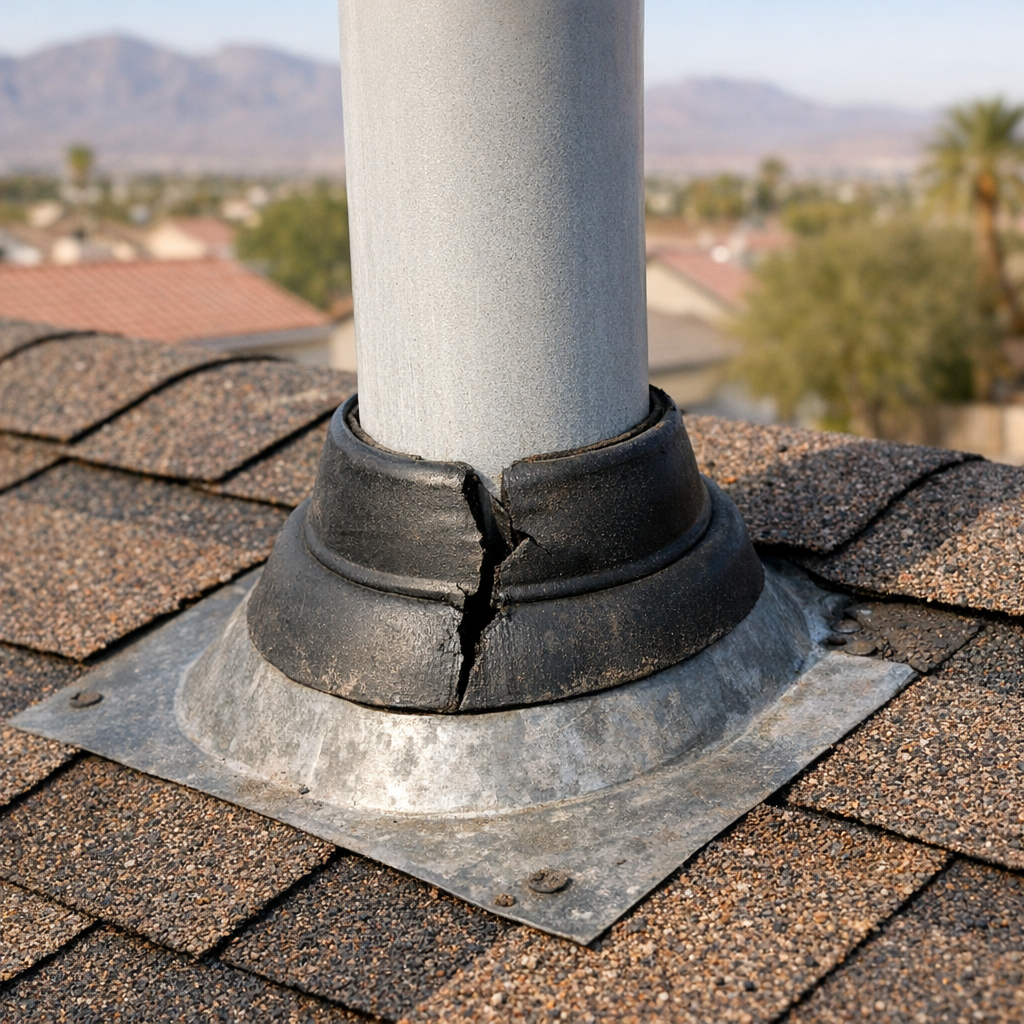
Roof pipe boot cracks in 89101 can open a weak point where a plumbing vent passes through the roofing. The visible split may involve the flexible collar, while a leak can also involve the surrounding flashing or roof surface. For a property owner in the Las Vegas 89101 postal area, the useful question is which part has failed and whether the adjoining roofing remains sound.
This guide explains what to document safely, how to compare inspection findings, and what a written repair proposal should clarify. It describes general inspection questions, not a completed Presto Roofing LV project. A photograph of a cracked collar alone cannot establish the condition of concealed layers.
What a pipe boot does
A pipe boot is a flashing assembly around a pipe penetration. Its design helps connect the pipe opening to the surrounding roof. Depending on the installed system, the assembly can include flexible material, formed metal and connections that direct water away from the opening. Roof materials and flashing designs vary, so one product does not suit every roof.
The pipe itself and the surrounding roofing perform different functions. A visible collar is only one part of the connection. An inspector should explain how the existing assembly works before recommending a patch or replacement. For an overview of related work, see our roofing services.
Keep any information about the roofing material, previous repairs and equipment service available. This background can help the inspector understand what was changed previously. It does not replace examining the current condition.
Signs you can document without roof access
Start with observations from safe locations. Note when a ceiling mark first appeared, whether it changes after rain, and whether a plumbing or equipment problem could also be involved. Photograph the same area over time so a new change is easier to distinguish from an old stain.
- Record the date and general indoor location of the symptom.
- Note whether moisture follows rain or occurs during dry weather.
- Save earlier repair invoices and photographs.
- Describe visible roof details only if you can see them safely.
- Keep occupants away from unstable ceiling material or wet electrical fixtures.
A ground-level photograph may provide useful context but cannot confirm the condition of a small flashing detail. Do not climb onto the roof for a closer picture. Arrange a roof inspection when the source remains unclear.
How an inspection separates the possible causes
Ask the inspector to distinguish observations from assumptions. A split collar may be visible, but the surrounding flashing, roof material and concealed connection can require separate evaluation. The written finding should identify what was seen and explain why it is relevant to the reported symptom.
Water does not always become visible directly below its entry point. A ceiling stain is a clue rather than a precise map of the defect. The investigation may need to consider other nearby details and whether the symptom has a roofing source at all. Review our roof leak repair information for the broader diagnostic discussion.
Useful photographs show both the overall location and the close-up condition. Ask what remains concealed and whether additional findings could change the proposed scope. Avoid proposals that offer certainty about every layer without explaining how that conclusion was reached.
Why roof material changes the repair discussion
A pipe penetration on a tile roof differs from one on a shingle or low-slope roof. Access, the flashing arrangement and the connection to the surrounding material can all affect the work. An inspector should identify the installed assembly rather than select a repair only because a product is available.
For a tile system, ask how the visible tile and the waterproofing layers below relate to the penetration. Our tile roof repair page and underlayment information help frame those questions. For a low-slope assembly, review the flat roof repair information.
Do not assume that a coating, sealant or replacement collar is compatible with every existing material. Ask the roofer to identify the intended product and the relevant installed-system guidance. Product compatibility belongs in the repair discussion before work begins.
Localized repair or a wider replacement scope?
A focused repair may make sense when the problem is limited and surrounding roofing remains serviceable. A larger scope may need consideration when inspection finds deterioration beyond the penetration, several unresolved defects or conditions that prevent a dependable local connection. The findings should support the recommendation.
Ask whether the proposal addresses only the visible collar or the flashing assembly and adjoining roofing as well. These are different scopes, even if both are described casually as a boot repair. Compare what each proposal includes before comparing prices.
If replacement of a larger roof area is recommended, request the specific reasons. Our roof replacement information provides context for discussing that option. A small visible crack alone should not be presented as proof that every roof layer requires replacement.
What should appear in the written estimate?
A useful estimate identifies the inspected location, the proposed repair and its limitations. It should help you understand what material will be addressed and how the new work connects to the existing roof. Ask how additional concealed findings will be documented and approved before extra work begins.
- The specific penetration or area being repaired.
- Preparation and damaged materials included in the scope.
- The intended flashing connection and compatible products.
- Access, cleanup and protection arrangements.
- Exclusions and any written warranty actually offered.
Interior ceiling work, plumbing repairs or unrelated roof defects may fall outside a roofing proposal. Clarify those boundaries instead of assuming that a general price includes everything. You can review our roof repair services before requesting a discussion.
Keeping useful records after the repair
Save the final scope, before-and-after documentation and any written terms with your property records. After later rain, note whether the original symptom changes. A remaining discoloration is not automatically a new leak, but fresh dampness or an expanding mark deserves attention.
Tell future service providers about the repaired penetration so their work can be coordinated around it. Arrange maintenance based on the actual roof system, access conditions and manufacturer guidance rather than an unsupported universal interval. See our roof maintenance page for related planning.
For a business property with several penetrations, a commercial roof inspection can help organize findings by location. Clear records make later comparisons easier and reduce confusion between an old repaired detail and a separate new problem.
Planning a pipe-boot inspection for a property in 89101
The ZIP code helps identify the service area; it does not identify the installed roof. When requesting an inspection in 89101, describe the actual property and the symptom instead of assuming that a nearby building has the same construction. A tile roof, shingle section and low-slope assembly can present different access and flashing questions.
Have the person authorizing the visit confirm access arrangements, the affected area and any available repair records. For a managed property, identify who can provide maintenance history and receive the findings. These practical details help the inspection focus on the reported problem without inventing a roof age, a project history or a diagnosis based on the postal address.
Ask for photographs that show the penetration in relation to the roof area and the building’s reported indoor symptom. If more than one location needs evaluation, label the observations consistently so records remain useful after the visit. Our service discussion concerns the roofing condition, not an assumed neighborhood-wide defect.
Questions worth asking before you authorize work
Ask what failed, what evidence supports the diagnosis and what remains unknown. Request photographs that connect the close-up defect to its location. Clarify whether the recommendation changes if adjoining material is found to be unsound.
A clear explanation does not need to promise a result for unrelated parts of the building. It should connect the observed condition to a defined repair scope. Be cautious about comparisons that rely only on a headline price while leaving preparation, materials and exclusions unexplained.
Choose the next step based on the inspection, not a guessed roof age or a neighbor’s repair. Properties within the same postal area can have different assemblies and repair histories. The condition of your installed roof is the relevant starting point.
Frequently asked questions about roof pipe boot cracks
Does a cracked boot always explain a ceiling stain?
No. The crack needs evaluation, but the indoor symptom may have another source. An inspection should consider the surrounding detail and the timing of the moisture before assigning a cause.
Can I seal the crack from the roof?
Do not climb onto the roof to apply an unknown product. Access, material compatibility and the condition of the whole assembly matter. Homeowners can document indoor observations and arrange professional evaluation.
Does a boot repair include plumbing work?
Not automatically. Roofing and plumbing scopes serve different purposes. Ask which work is included and whether a separate trade needs to evaluate the pipe or another building system.
Will the whole roof need replacement?
Not necessarily. A localized defect may permit a focused repair. Broader findings can change that recommendation, so ask the inspector to explain the actual condition supporting the proposed scope.
What information should I provide when booking?
Provide the property location, photographs taken safely, symptom timing and any relevant service records. Explain whether water follows rain or appears during dry weather. Avoid accessing the roof to gather additional pictures.
Discuss the roofing detail with Presto Roofing LV
For help planning the next inspection step, contact Presto Roofing LV and describe what you are seeing. Call 702-867-0187. Share the timing, indoor location and repair history so the discussion begins with useful information rather than assumptions.